Murphy Beds and the Art of the Hidden Bedroom
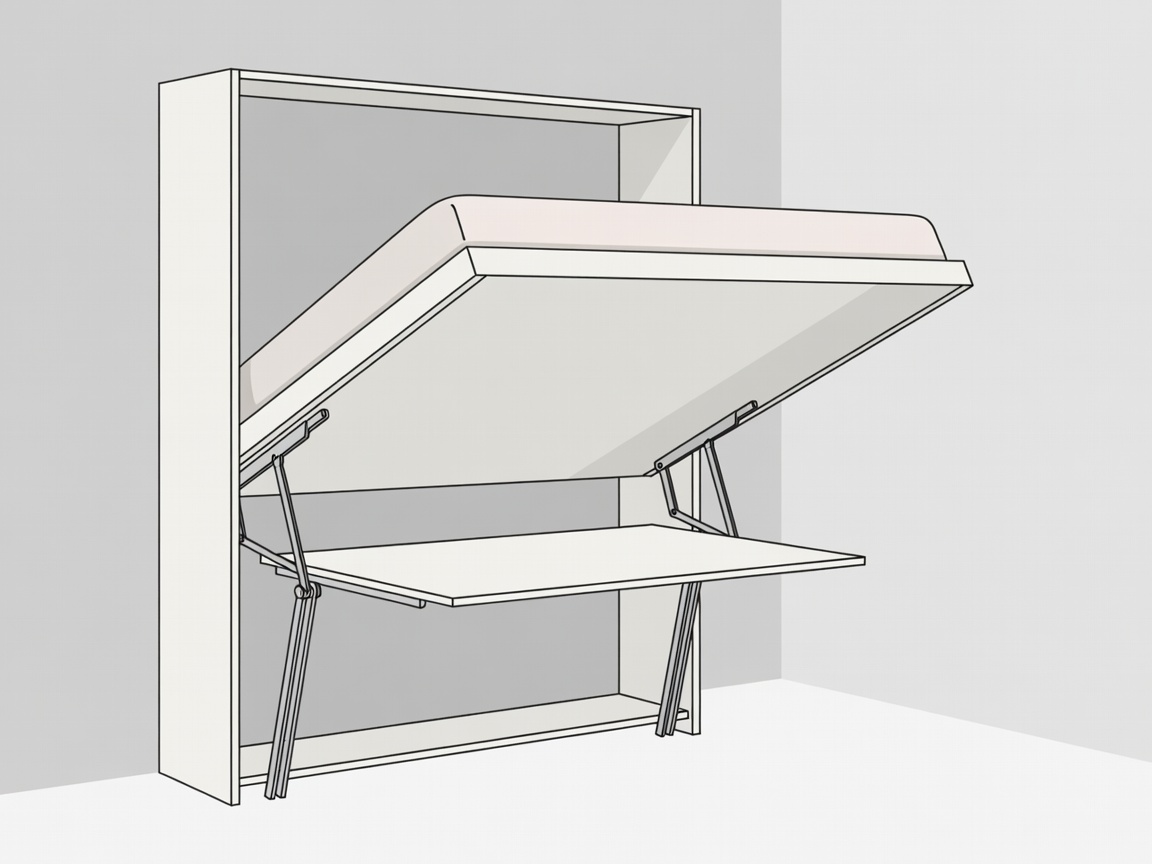
A standard double bed occupies approximately 2.6 square meters of floor space. In a 30-square-meter apartment, that is nearly 10% of your total real estate dedicated to an object you only use while unconscious. The solution is absolute mechanical concealment.
The Modern Murphy
Forget the clunky, creaking spring-loaded beds of the 20th century. Today’s hardware utilizes precision gas struts and heavy-duty aluminum frames, allowing a heavy mattress to be lifted with a single hand. More importantly, they integrate with the surrounding architecture.
Over-Desk Systems
The bed pivots down directly over a heavy-duty desk. The desk mechanism stays perfectly level during transition, meaning you don't even need to move your monitor or coffee cup.
Sofa-Bed Hybrids
A slim wall cabinet sits behind a low-profile sofa. When lowered, the bed frame rests on the sofa chassis, instantly converting a living room into a master bedroom.
Ceiling Retraction Systems
For ultimate floor-plan liberation, ceiling-mounted beds operate on counterweighted pulley systems or electric winches. During the day, the bed acts as a floating architectural feature—perhaps fitted with recessed LED lighting on its underside—hovering 2.5m above the floor. At night, it glides down smoothly over your seating area.
This approach requires ceiling structural integrity but completely eliminates the deep wall cabinetry required by a traditional Murphy system, making it ideal for narrow, corridor-like micro-apartments.